











 Fabian
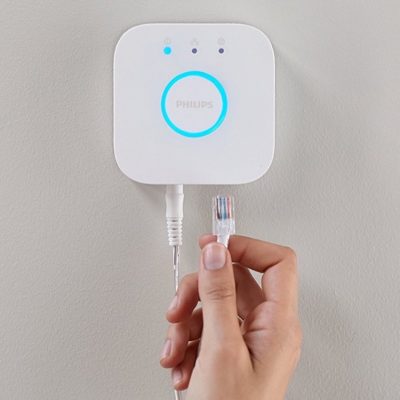
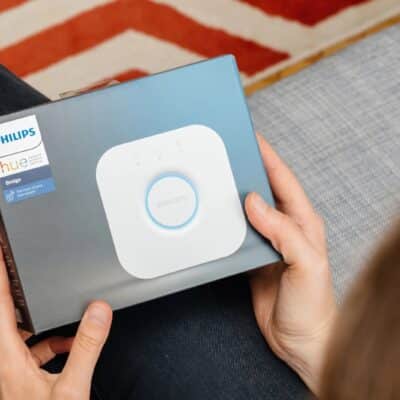
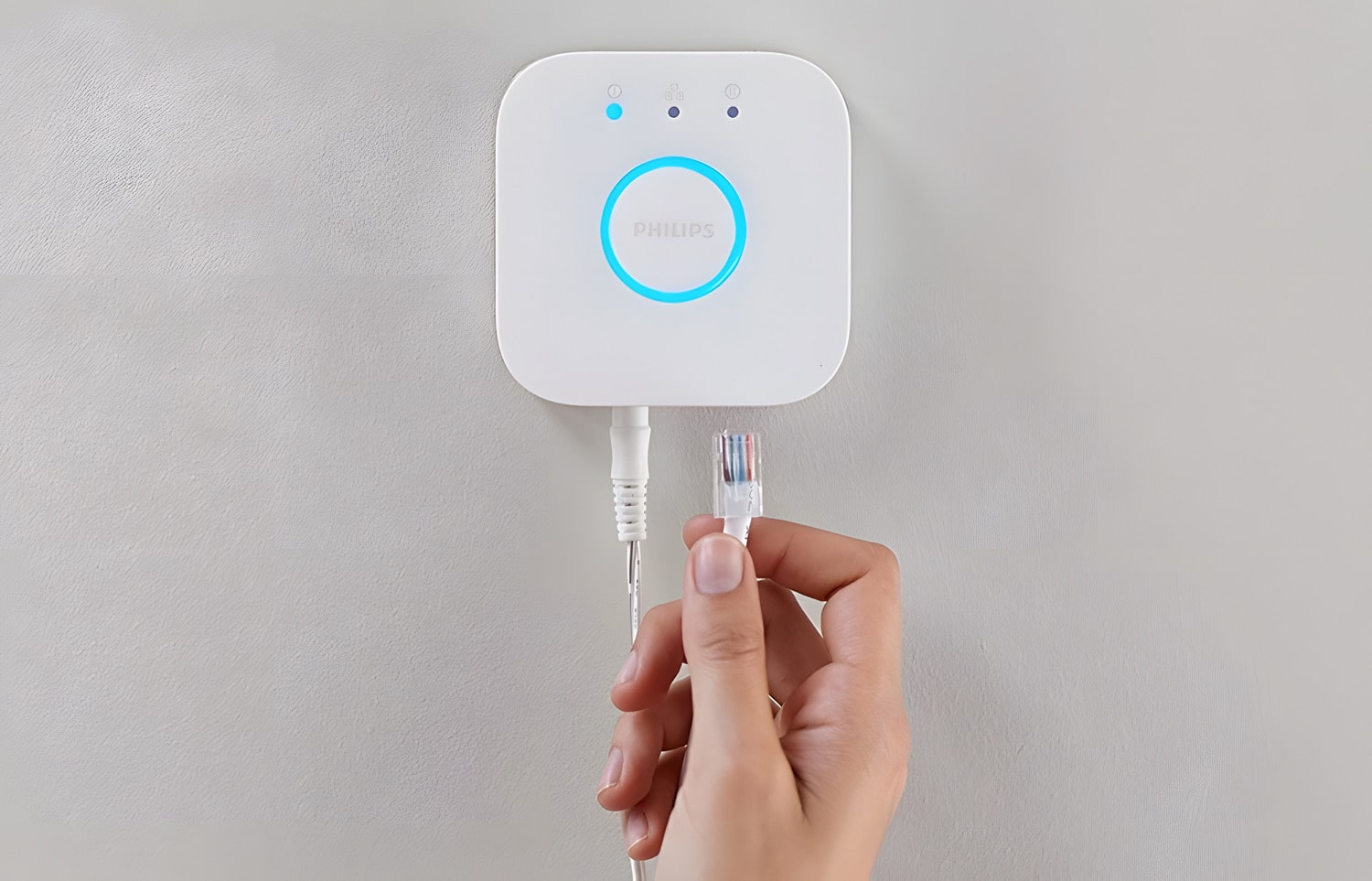
It’s incredible how quickly time flies. Almost exactly ten years ago, Philips Hue introduced its still current Bridge (see header image). Back then, it was a modern piece of technology that was even made compatible with Apple HomeKit shortly afterwards. But one limit has never changed since then: The maximum number of connected lamps.
In the official documentation, almost ten years after the launch of the Hue Bridge, Philips Hue still states that a maximum of 50 lamps can be connected. The hard limit is 63 lamps, but even before that the first performance losses can occur.
A lot has happened in the past ten years. Small Hue installations have become huge smart homes, some households are equipped with Philips Hue from front to back and bottom to top. Fifty lamps is often not enough. As a result, multi-bridge installations have emerged, which are now at least supported by the Hue app. Nevertheless, many power users have been asking for a more powerful bridge for years.
New Hue Bridge with more lights and WiFi?
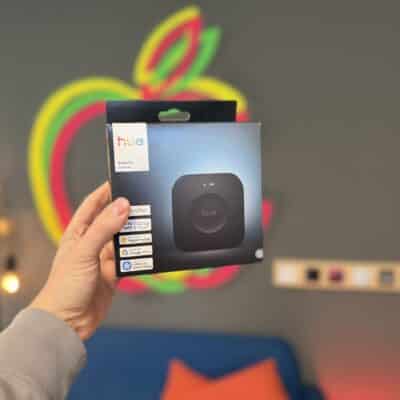
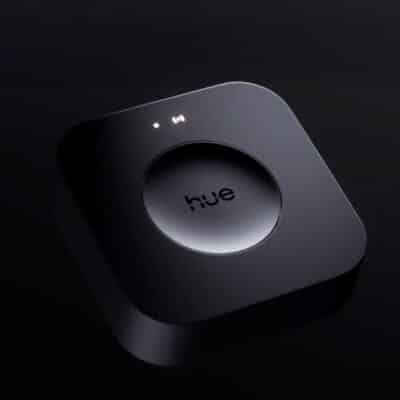
These wishes will probably be fulfilled in 2025. Apparently, Philips Hue has been working on a new bridge for some time, which should be significantly more powerful and be able to connect to more lights. There is also a good chance that another wish of the community will be fulfilled: The next Hue Bridge will probably be able to connect directly to the smart home via WiFi. Up to now, you have had to rely on a cable connection to the router.
I can well imagine that there will also be a function for transferring data from the “old” to the “new” bridge. Philips Hue already offered something like this ten years ago when it went from the first to the second generation. Hopefully the much-desired backup function will not be forgotten on this occasion. Matter support is also fairly certain, as this is already included in the current model.
I have not yet seen the possible new Hue Bridge myself. So there is still a bit of suspense, a possible launch could be planned for fall.
Keine Produkte gefunden.


It would be really nice if Signify would replace the old hub for a new one, when people have alot of Bulbs and accessories. Philips Hue ain’t cheap so asking for more money for a new hub when your old hub is just not sufficient for larger (very expensive) deploiments.
That would be nice, but I bet those greedy SOBs list the new bridge for $99.99 if/when it becomes available.
I hope matter support would be optional – I don’t believe the integration with HomeKit supports adaptive lighting over matter… unless something has changed.
Also I run one hub with and one hub with matter – and the hub connecting via matter is temperamental with HomeKit – not worked out who is at fault – but does seem more reliable since tvOS 18.4 came out…
That has changed. You can now.
It will be interesting to see if, and how, a new Hue Bridge expands the maximum number of Hue devices that can be connected. I think the current recommendation of 50 bulbs is the practical limit not of the Bridge but of the Zigbee bulbs ability to form larger mesh sizes that work reliably with all topologies.
Perhaps a new Hue Bridge will feature a built-in Thread Border Router that will work with the next generation of Hue bulbs that could add Thread to their Bluetooth and Zigbee communications? This would then permit many more bulbs than is currently possible with Zigbee in a single mesh.
A Thread mesh network can theoretically support up to 16,384 devices. This is based on a maximum of 32 active routers, each capable of handling 511 end devices. However, in real-world applications, Thread networks typically aim to keep the number of routers between 16 and 23 to maintain stability.
Transitioning to Thread would be a bold move but it overcomes the speed and size limits of using Zigbee and would allow future Hue bulbs, lights and accessories to be Matter-over-Thread, and for the first time a mixture of Hue and WIZ devices that are Matter-over-WiFi, might be used together in a unified system.
Philips may also add support for occupancy sensing using a Zigbee or Thread variation of their WIZ SpaceSense technology that uses WiFi signal disturbance to detect movement?
We shall see!
Too little, too late (it only took them 10 years!) – unless they plan to support Thread. Waiting for the day Matter will obsolete Hue and other proprietary hubs.
WiFi could be an interesting move, but I’d prefer PoE support.
The issue is that these are either/or technologies. You need to supply power to a WiFi hub or networking to a PoE powered device. Many smart homes have PoE for running cameras and WiFi APs, where more traditional homes only have Ethernet ports on their routers.
I can see benefits to both USB C powered WiFi hubs and PoE powered, Ethernet connected hubs, so it’ll be interesting to see which way they go. I suppose another solution is to support both, but that’ll add to the base cost of the hubs.
Not fair from phillips to release so many products and no way to control them correctly…. Bridge should be the priority to get satisfaied customers