





 Fabian
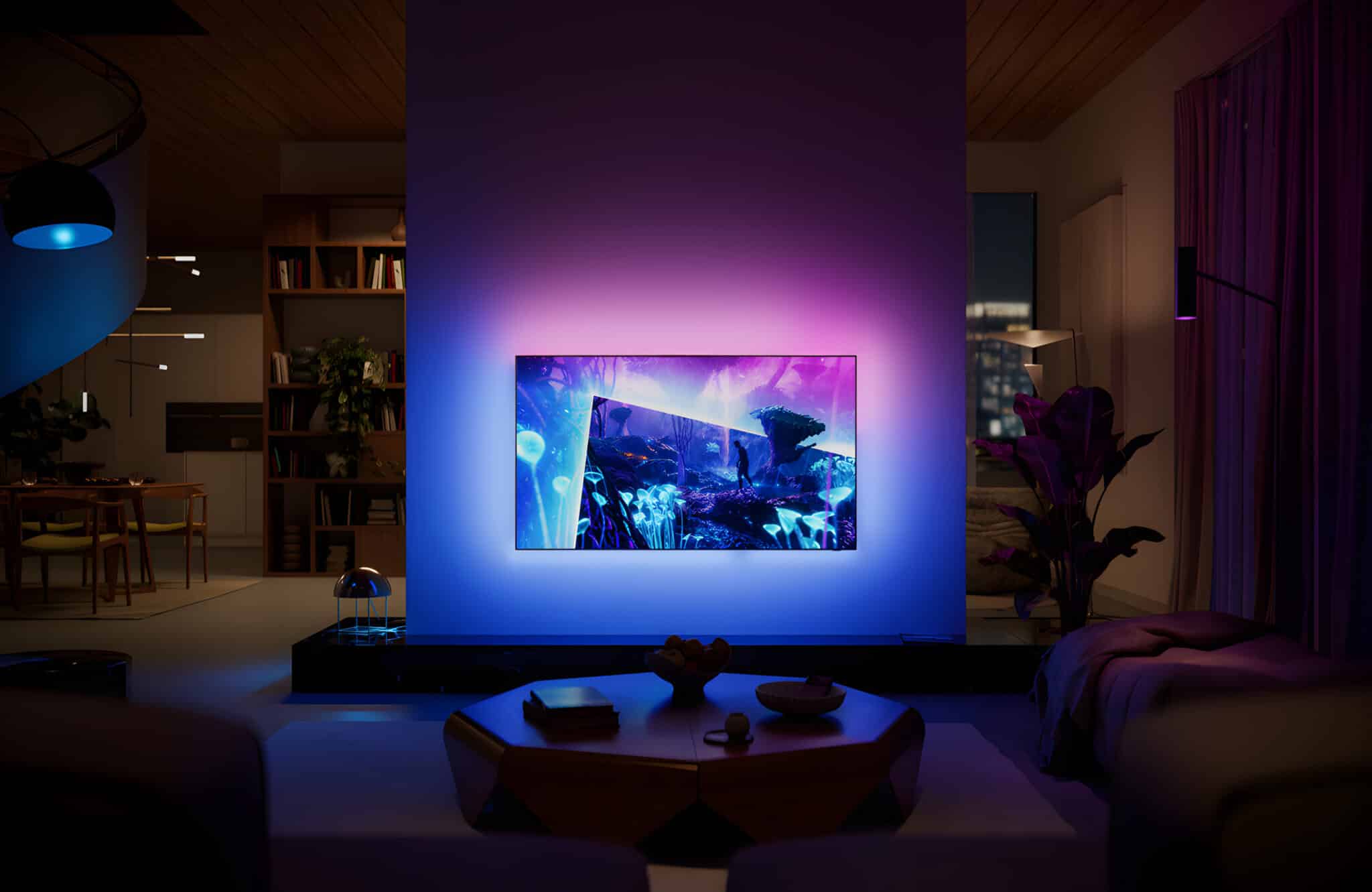
With its new TVs for the 2026 model year, Philips TV is turning a new page. Instead of Ambilight+Hue, the company will now focus on AmbiScape—a feature that, for the first time, combines the familiar Ambilight with Matter-compatible lighting from various manufacturers. The approach sounds exciting, but it’s also a direct result of old conflicts.
Why Ambilight+Hue had to go
One point that many people still don’t realize today: Philips isn’t just Philips. Different companies now stand behind the various product categories. While Signify handles smart lighting, TVs and audio products fall under TP Vision. This is exactly where the problems began a few years ago.
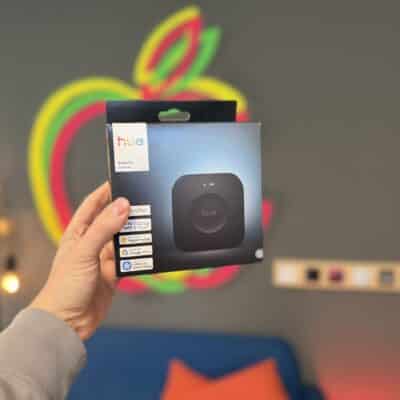
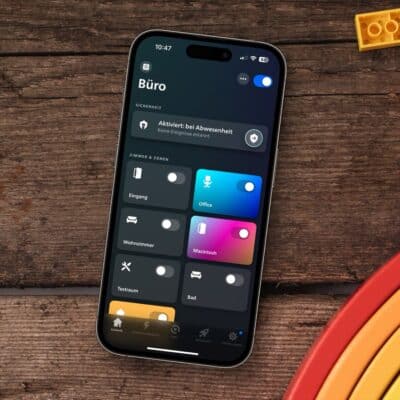
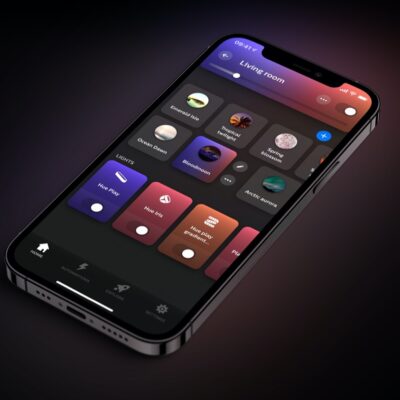
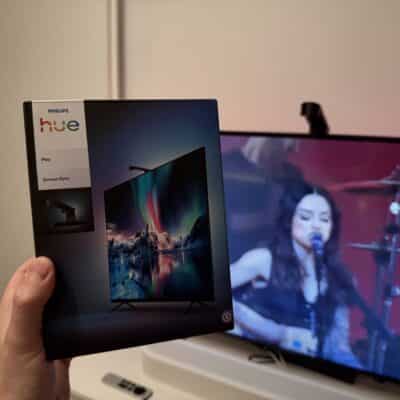
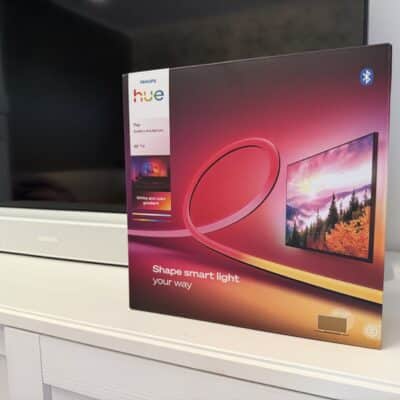
For a long time, Ambilight+Hue was a simple solution for extending the TV experience throughout the entire room. But when Signify launched its own solution—the Philips Hue Play HDMI Sync Box—interests began to clash. From TP Vision’s perspective, competition suddenly emerged within its own ecosystem.
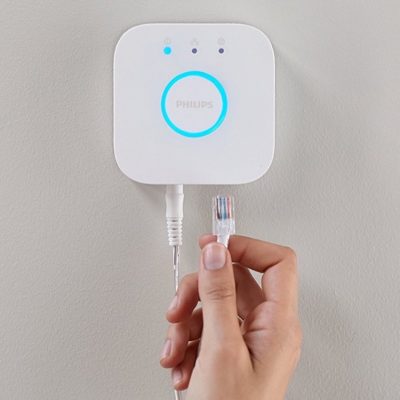
A few years ago, new Philips TVs were no longer equipped with Ambilight+Hue. This was particularly bitter for existing customers: older TVs with this feature are not compatible with the new Hue Bridge Pro. There will certainly be no update for this.
AmbiScape Aims for a Fresh Start with an Open Standard
With AmbiScape, TP Vision is now attempting a fresh start—and is deliberately focusing on openness rather than a closed system. Initial beta tests were already conducted in 2025 on select models, and the feature will now be officially launched in 2026.
AmbiScape will be featured in all new models starting with the 8000 series, including all 2026 OLED TVs as well as the new Mini-LED TV from the 981 series. Technically, the system differs fundamentally from its predecessor: Instead of relying exclusively on Hue, it now uses the Matter smart home standard.
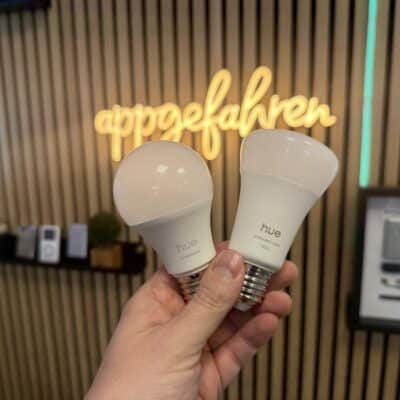
In practice, this open approach is particularly evident in device selection. In addition to classic Hue bulbs, lighting from other brands can also be integrated. E27 bulbs from Philips Hue, Nanoleaf, WiZ, IKEA, and Osram have been tested and optimized by TP Vision to ensure the best possible compatibility with AmbiScape. In principle, other Matter products and brands can also be integrated. In this case, however, unintended jumps may occur, particularly during color changes and variations in brightness.
In any case, communication between the TV and the light bulbs takes place via Matter over Wi-Fi. A direct Thread connection with the light bulbs is not supported.
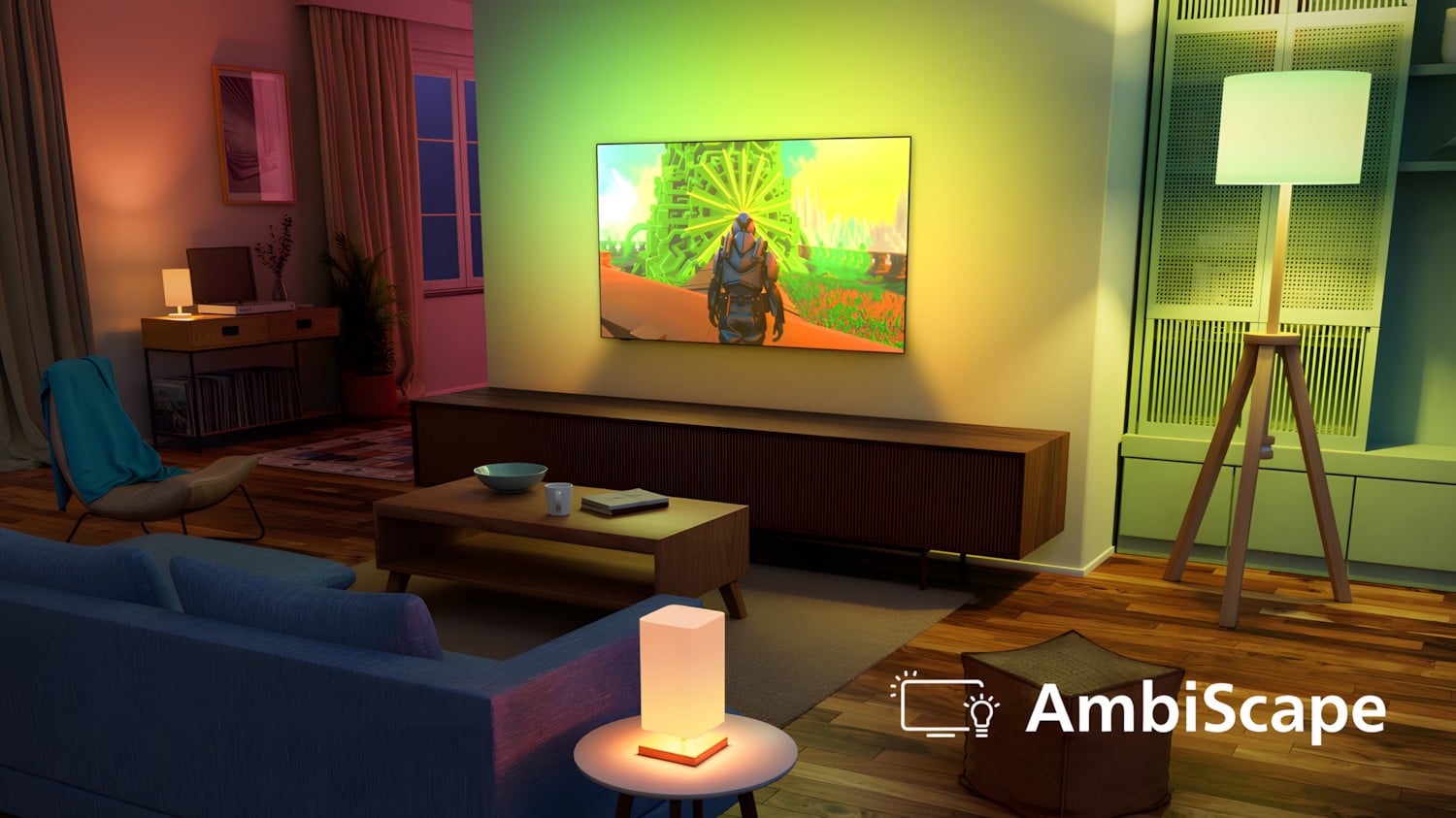
These are the limitations of the new AmbiScape
Regardless of the manufacturer, there are some limitations. While up to ten lights can be paired with the TV, only four are currently actively involved in the synchronization. TP Vision has indicated plans to increase this number to up to eight for higher-end TVs, but that is still a long way off.
Another difference from earlier Hue integrations is the lack of flexibility in positioning. While classic Hue Sync setups allowed you to place the lights relatively freely in the room, AmbiScape works with ten fixed positions. This makes setup easier, but limits precision.
Added to this is a technical issue that is currently almost impossible to avoid: latency.
Using Matter results in a delay of about half a second. This is particularly noticeable in fast-paced scenes—such as in action movies or games—and can noticeably impair the immersive effect, especially when the lights are located right next to the TV.
Modern lighting such as Gradient Lightstrips with color gradients is also left out. These cannot currently be controlled via Matter. Of course, this is not TP Vision’s fault, but rather a limitation of the Matter standard itself.
My initial conclusion: Good idea, but not there yet
AmbiScape is definitely an exciting step. TP Vision is opening up to other manufacturers and moving away from strict ties to a single system. This is a clear advantage, especially for users who already have various smart home products in use.
At the same time, however, it’s clear that the new solution can’t yet keep up with earlier approaches from a technical standpoint. The limited number of active lights and, above all, the noticeable delay show that there’s still a lot of fine-tuning needed here.
In the end, there’s a certain irony: separate worlds continue to exist under the shared Philips name. While Signify demonstrates what’s possible with its own solutions and Gradient products, TP Vision is going its own way. Since Philips Hue has already presented a pretty good solution on LG and Samsung TVs with the Sync TV app, it would have been a logical step, in my view, to integrate this technology into Philips TVs as well…


 Mel
Mel
Honestly don’t understand why Signify doesn’t just come out with an Android version of the app, which could work on any Google TV based TV. They could still charge the same money for the usage, but would make it a lot more accessible.
I understand, that this would render the sync box mostly useless, but in the long run I think they’d make more money with the app, than the hardware.
I suspect it might actually be a legal issue. They may not be allowed to produce an adroid/google tv app for as long as TP vision uses it in their TV’s. Now that they have stepped away from that this year (2026), perhaps that will change in the future. On the other hand, android/google TV is losing ground in the smart TV space. With large manufacturers like LG and Samsung maintaining their own OS and now TP vision leaving it behind as well, it is mainly Sony and TCL that remain, so I’m not sure how usefull that will be in the future.
Also, the ‘break’ between Signify and TP vision occured when they launched the Sync box, which allowed syncing of TV’s with Philips Hue beyond just TP vision products and suddenly their ‘partner’ became a competitor. I believe it was then they decided to end their relationship with Signify, drop Ambilight+Hue and go their own way with Ambiscape.
^ +1 This
+1 Exactly! An android/Google or apple TV version could just solve all those problems
Will it be released for PML9008 (2023 Miniled) series?
This is ridiculous, i own 818 oled model that is castrated from hue sync. I will never buy philips tv again.