




 Fabian
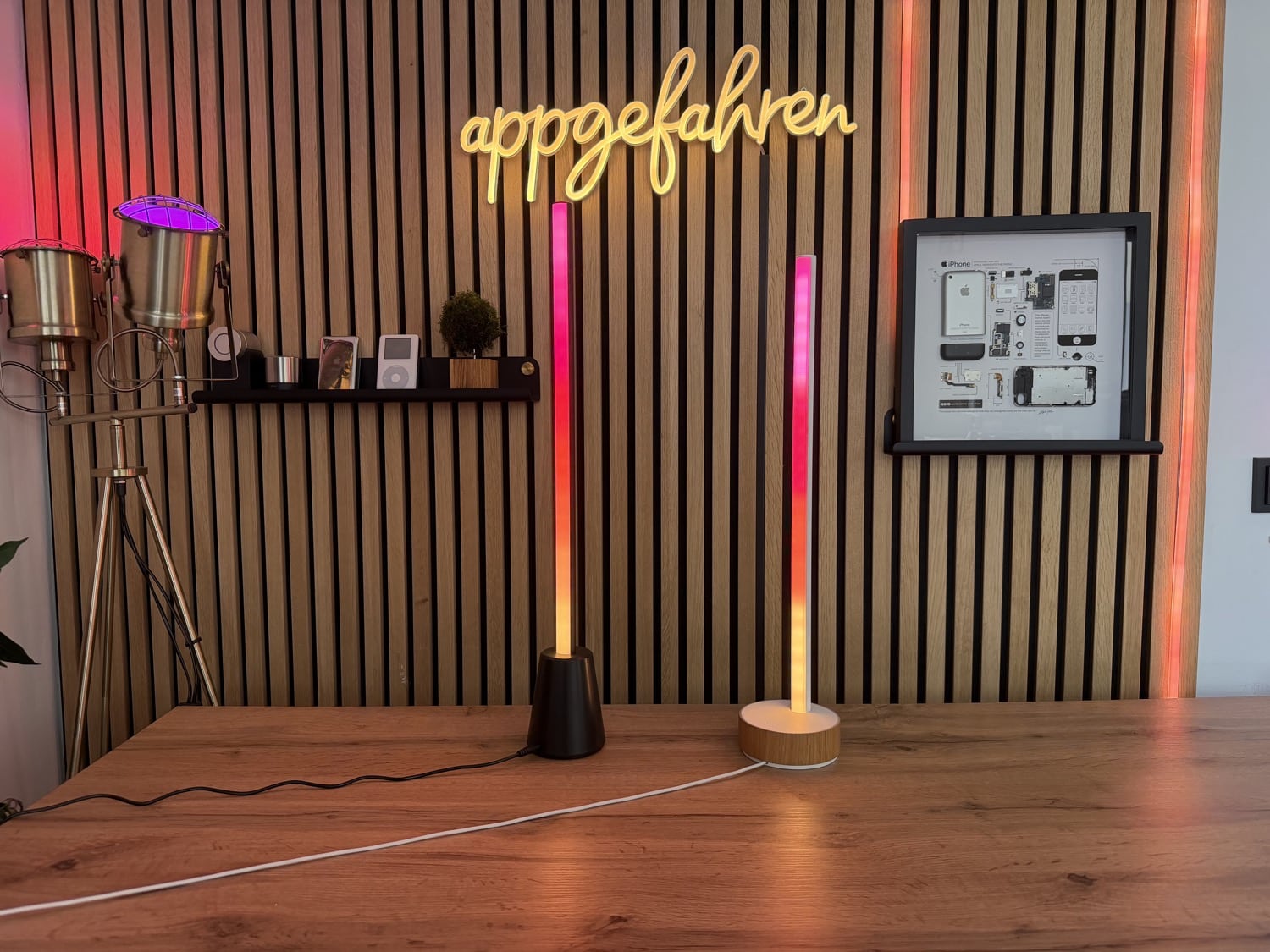
Philips Hue has launched a new table lamp, the Hue Play, which is available now. Inevitably, one has to compare this new release with the Hue Gradient Signe, which has been available for quite some time. How do the two products differ, and what are the pros and cons of each table lamp?
The Hue Gradient Signe is more expensive and offers higher-quality finish
When it comes to price, the situation is quite clear. With a list price of 219.99 euros, the Hue Gradient Signe is exorbitantly more expensive. The Hue Play table lamp, on the other hand, is almost a bargain at 79.99 euros. However, the Signe offers three different variants to choose from, one of which even features a wooden inlay in the base. Additionally, the Signe’s housing is made of aluminum and feels correspondingly higher quality. From a certain distance, though, this isn’t particularly noticeable.
The light bar is almost the same length
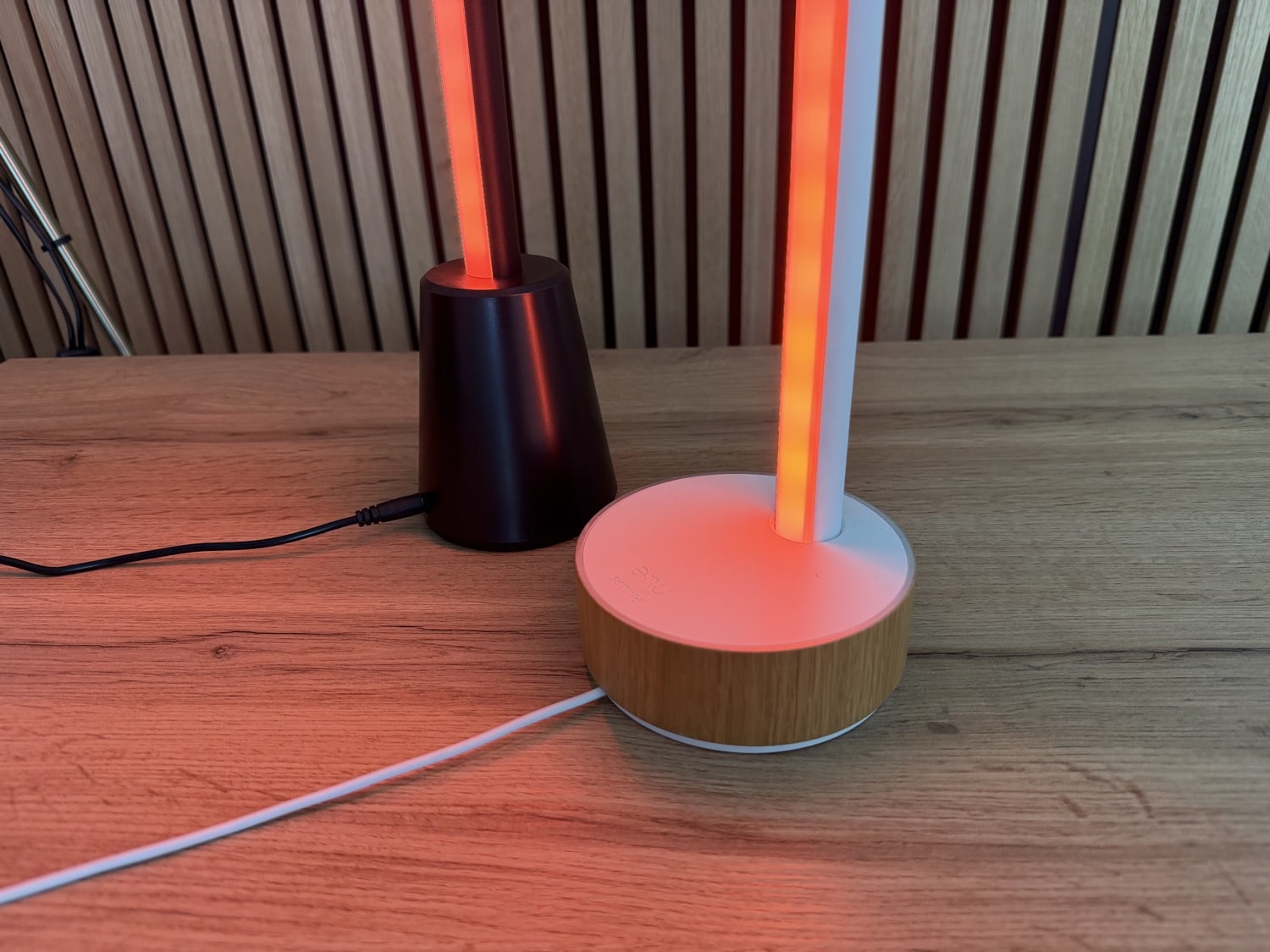
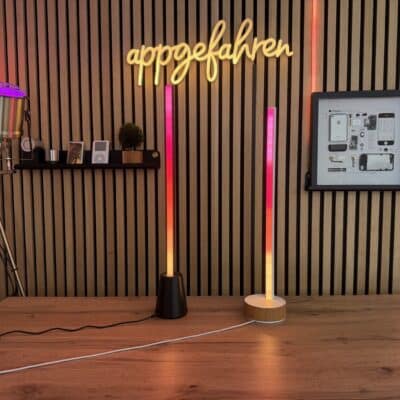
The length of the light bar on both lamps differs only marginally: 51 centimeters for the Signe, 50 centimeters for the Play. There are, however, significant differences in the base: On the Hue Gradient Signe, it’s only four centimeters high and significantly wider. In contrast, the base of the Hue Play table lamp is 11 centimeters high and significantly narrower. To ensure that this affordable table lamp remains stable, the base is considerably heavier.
Significant differences in brightness and color gradients
The LED technology of the two table lamps also differs. The Hue Gradient Signe can emit up to 1,040 lumens of light, making it significantly more powerful than the Hue Play, which, according to technical specifications, reaches only 400 lumens. With white light, a clear difference is visible to the naked eye. The situation is different when it comes to colors, however; there isn’t much difference between the two models in this regard.
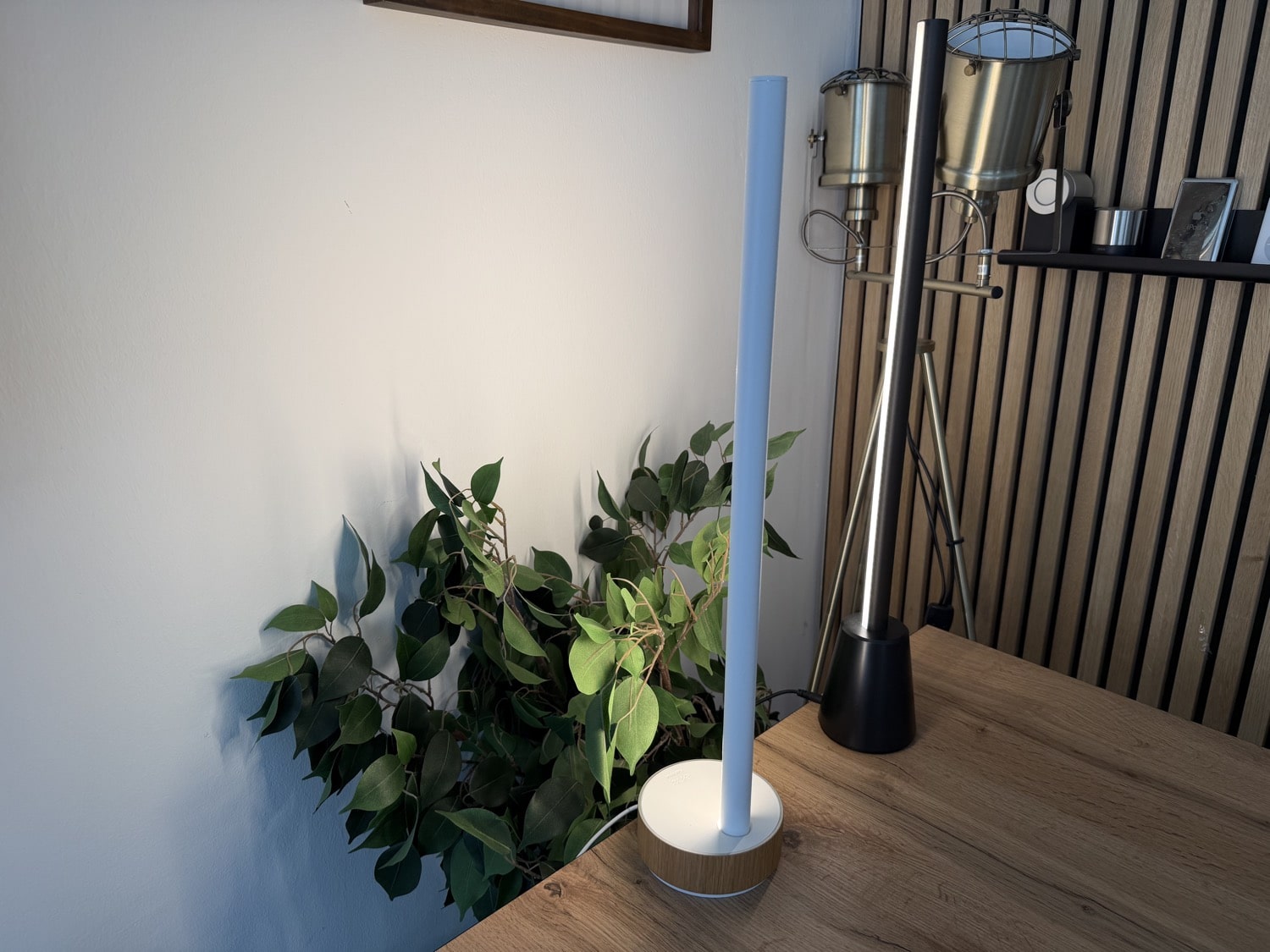
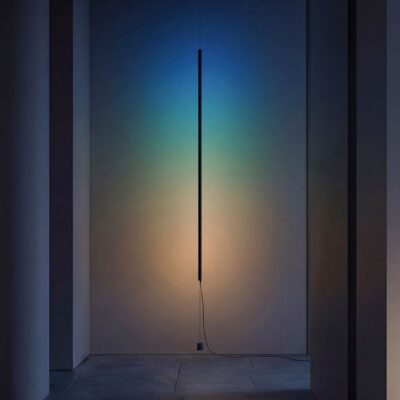
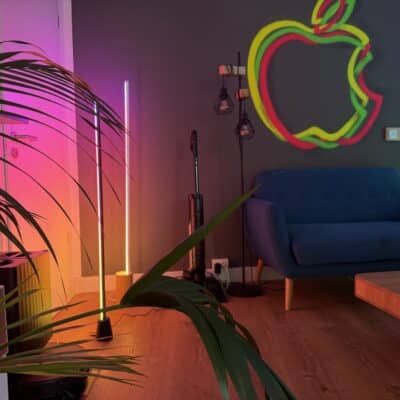
However, when it comes to colors, I noticed another detail where the new Hue Play table lamp clearly comes out on top. The Hue Gradient Signe has only four sections, each 12.5 centimeters wide, and can therefore display only four different colors at a time. On the Hue Play table lamp, the sections are only half as wide. This ensures that color gradients can be rendered much more beautifully.
The Hue Play table lamp finally has a compact power adapter
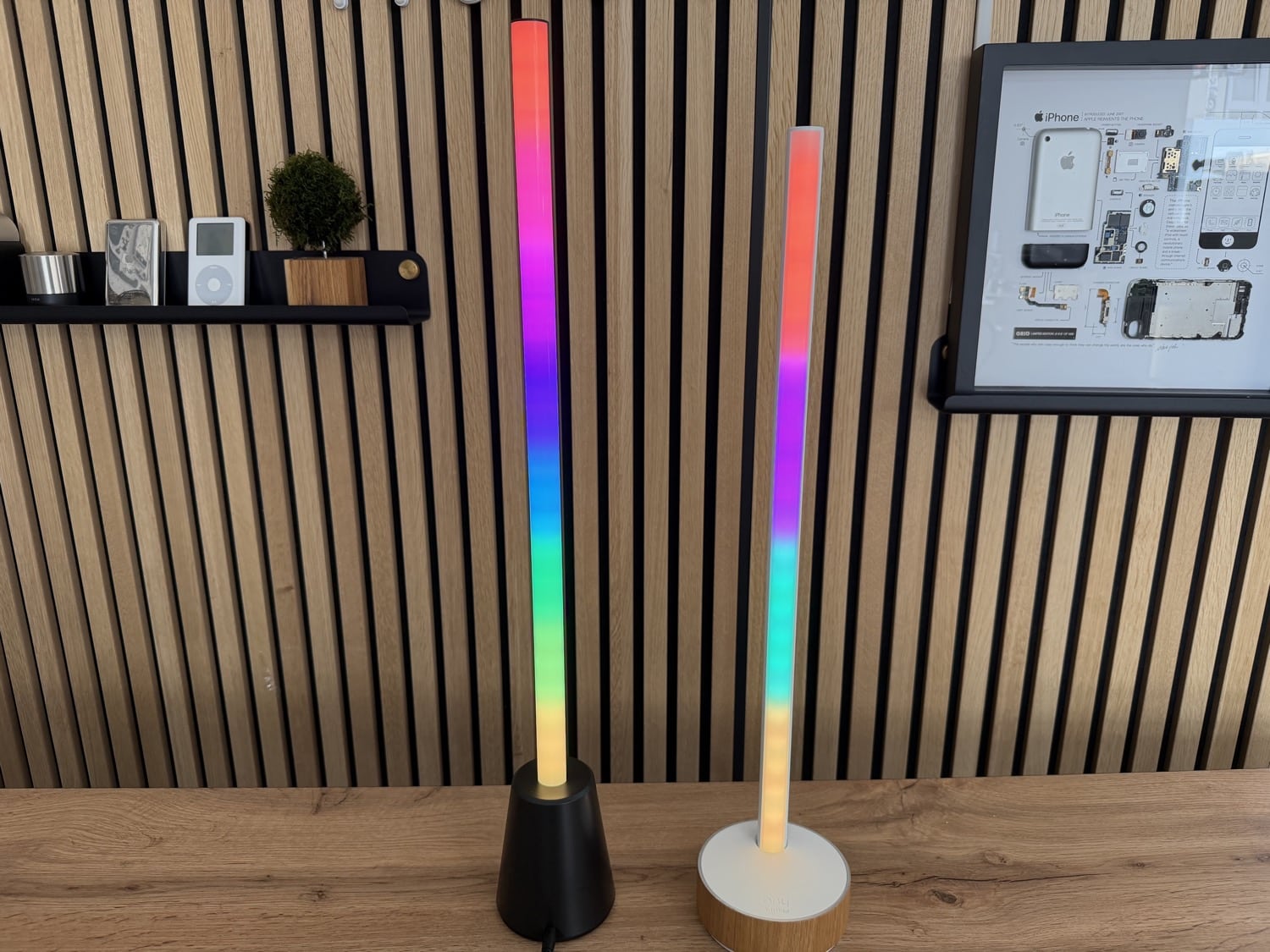
There are a few differences when it comes to the power connection. With the Hue Play, the cable can be unplugged directly from the base, but it’s permanently connected to the power adapter. With the Hue Gradient Signe, it’s exactly the opposite. Additionally, the power cable here is a few centimeters longer, though that’s unlikely to make much of a difference.
The situation is different with the power adapter. The Hue Gradient Signe uses the well-known, bulky power adapter that’s been a thorn in all our sides for years. The Hue Play table lamp, on the other hand—which isn’t quite as power-hungry—comes with a comparatively tiny power adapter that finally stops causing headaches when used with power strips.
Is there a clear winner?
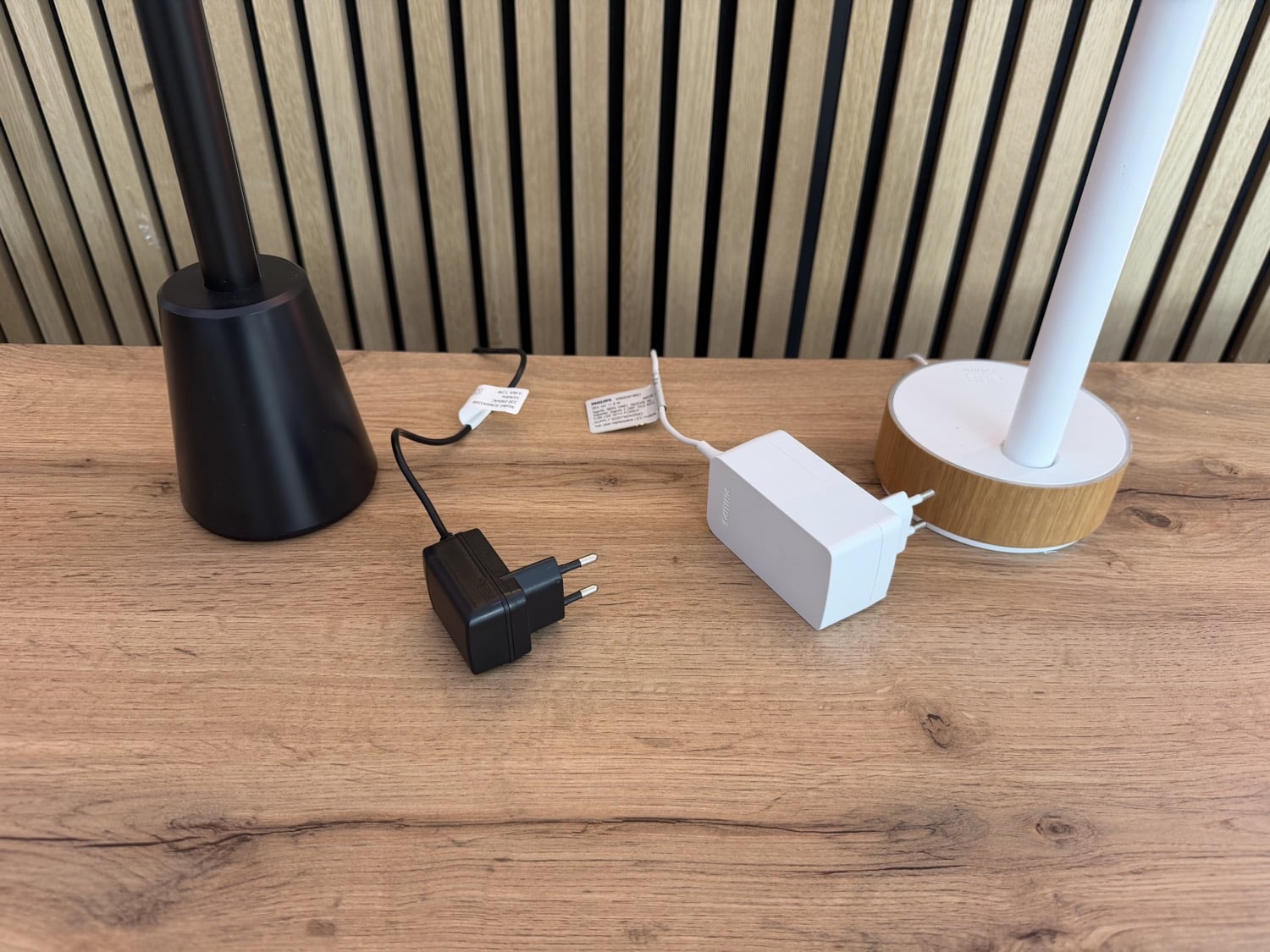
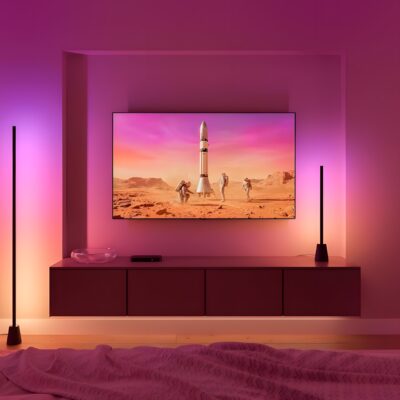
If you haven’t completely fallen in love with the slightly more stylish design of the Hue Gradient Signe, definitely don’t want a black table lamp, and don’t necessarily need the maximum brightness with white light, then I have a clear recommendation for you. The Hue Play table lamp stands out with a significantly lower price and smaller LED sections that create more beautiful color gradients when used as mood lighting. As a little bonus, it finally comes with a compact power adapter.

Hue Play table lamp
$79,99 / €79.99
Keine Produkte gefunden.


I think the next comparison should be with wiz. I dont like this lamp because it looks to much like the wiz. This, along with the launch of essentials suggests that the company is trying to make cheaper products. That always starts out well as higher end components are still being manufactured and can find there way into lower tier products. It never ends well though.
The Play Table lamp is noticeably dimmer than the Signe, although Play floor lamp is not quite as stark. The differences are especially noticeable if you use any of the lighting FX like Sparkle, Glisten, Candle, etc. Still I think the tradeoff is more than worth the cost savings, they are still excellent for ambilight and general mood lighting. Sadly my Play Floor Lamp was faulty out of the box so I had to send it back. It kept losing connection and resetting itself to pairing mode. I could easily recommend these, still good looking hardware despite the cost cutting, and no assembly required.