










 Fabian
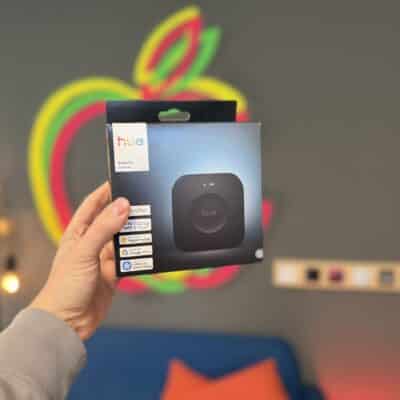
Philips Hue unveiled several new wall switch modules on Tuesday – unfortunately only in Europe. Three of them are designed to integrate “simple” ceiling lights—without smart connectivity—into the Hue system. But couldn’t you just use a Shelly instead? After all, they’ve been on the market for much longer and cost just under half as much.
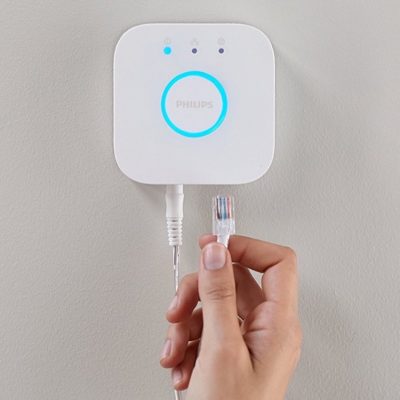
I’ve even read online that Shelly’s modules are smaller and therefore easier to install. Let’s take a look at that first. The Shelly Dimmer Gen3 measures about 38 x 42.5 x 16.5 millimeters. The new wired Hue wall switch modules measure 37 x 41 x 17 millimeters. I’d say these dimensions are absolutely comparable.
Only the Shelly 1PM Mini module is slightly more compact at 29 x 34 x 16 millimeters. That said, it’s important to note that it’s completely rectangular and not rounded on one side. And just for comparison: The “old” battery-powered Hue wall switch module is just 10.2 millimeters thick.
The big advantage is integration into the Hue system
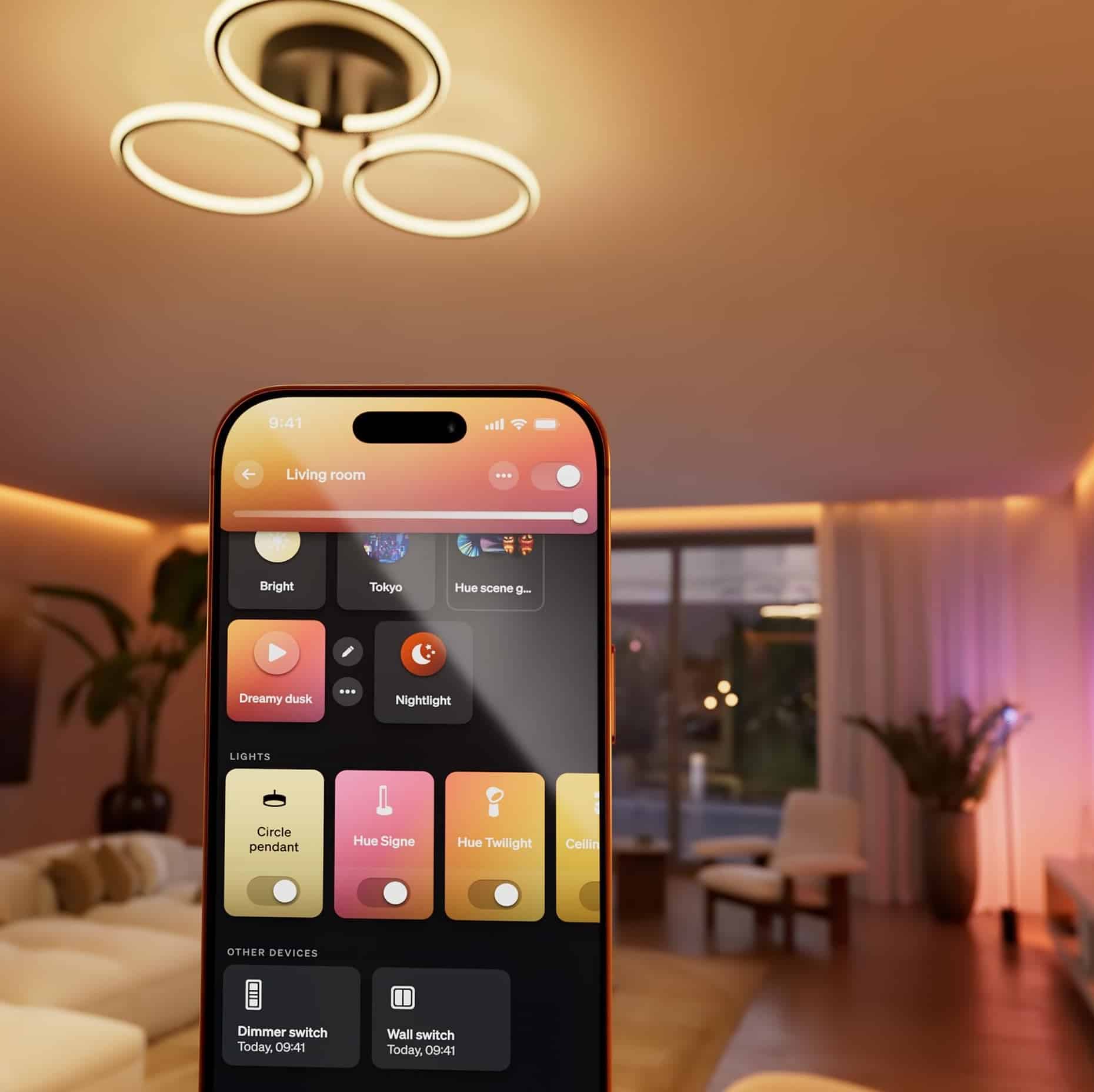
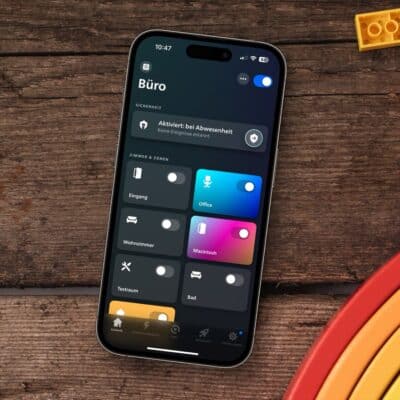
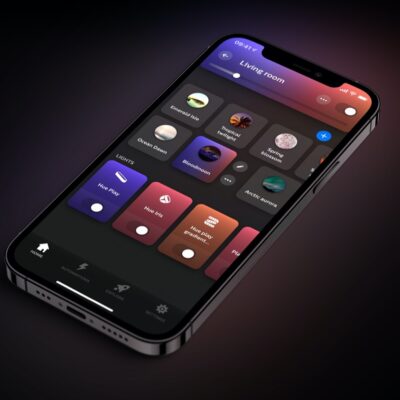
The big advantage of the Hue wall switch modules is, without a doubt, their integration into the Hue system. Your “dumb” ceiling light—which might not be all that easy to replace—suddenly appears among your other lights in the Hue app and can be controlled with ease.
You even have the option to use the Hue wall switch module connected to the non-smart ceiling light as a switch for other Hue lights in the same room. And you can do this with the usual simple setup in the Hue app, which anyone can handle.
Sure, a Shelly could do that too—but only through roundabout ways and systems like Home Assistant or Homey. That’s certainly not for the general public, though; it’s a pretty niche solution.
I’ll provide you with more details and answers to any remaining questions—such as how to combine the new modules with a two-way or cross-wiring setup—in the coming days.
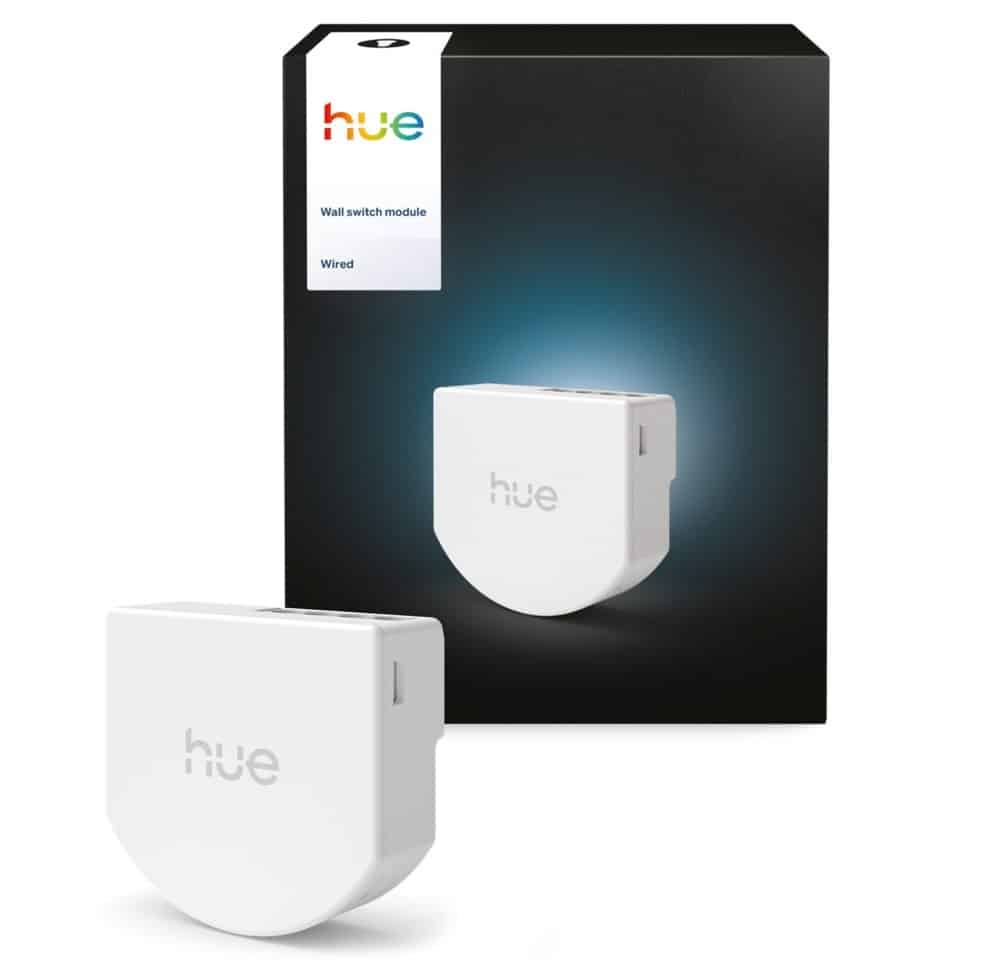
Hue Wired wall switch module
€44.99

Hue Wired on/off switch (1-channel)
€49.99



Any idea when there will be a US release?
Hello! I have a question about the new Philips Hue wired modules. My main goal is to replace the old wall switch modules so I no longer have to worry about changing batteries.
I’d like to know how it works when using bulbs that are already Hue with these new modules. Is it possible to install them normally on the circuit without the module cutting power to the smart bulbs?
Also, if the module acts as a relay (controlling a standard/dumb bulb), is there an option in the app to ‘hide the controlled bulbs’? The idea would be to hide this specific bulb from the app interface and use the physical switch solely as a scene and zone controller for the other Hue bulbs I already own. How does this setup work? Thanks!
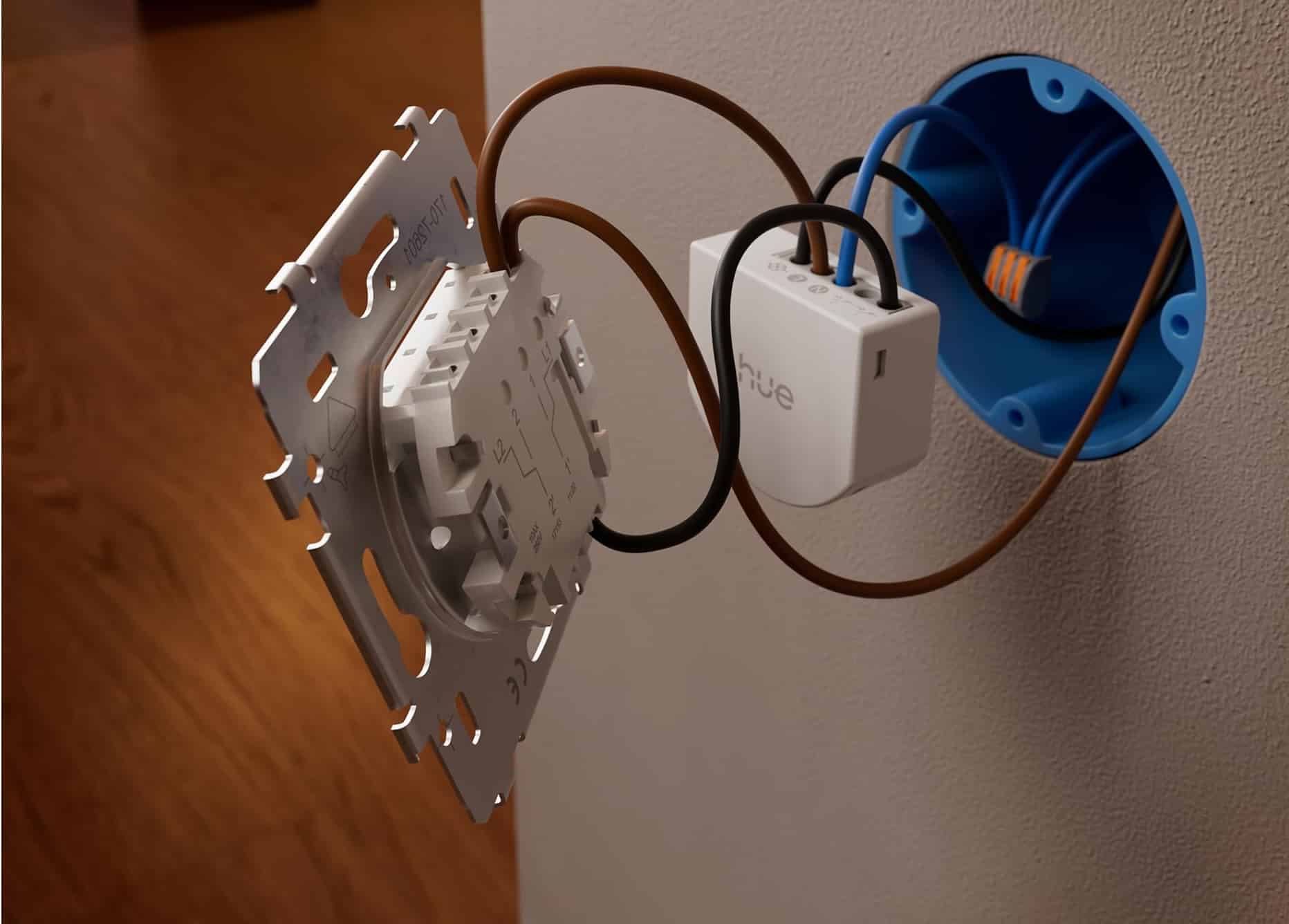
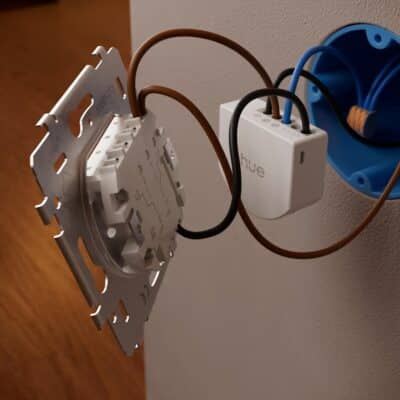
The new wired wall switch module is not controlling the load, so the Live and Load wires in the switch backbox are still linked together with the supplied Wago connector to provide a Hue smartbulb with constant power. This is the same as the battery wall switch module but the supplied Wago is now a 5-way type.
Note: the new module must be connected to both Live and Neutral wires to receive power. This means that to install the new module, there must be a Neutral wire present or it will not work.
For homes in the UK, having Neutral present in the switch back box is not common, so for all such homes it will not be possible to replace the battery module with the new wired module.
BTW the new module uses push-in terminals for all wires, and the thin gauge cables used by the battery module to connect to the dumb switch will need to be replaced with solid core mains wires (not supplied).
Note: to release a wire from a push-in terminal a small (2.5mm) flat bladed screwdriver must be pushed into the rectangular slot next to the wire entry.
Be aware that there are also a new wired on/off switch modules (1 or 2-gang) and these are intended to control dumb bulbs with a Hue system and should not be used with Hue bulbs.
I have the ‘old’ battery powered modules when they came out. I only had to replace one battery out of 7 modules. Why would you change the battery version for a wired one? when you only have to change the battery once every 3 to 4 years or even longer? Yes when you have the the choice a wired one or a battery powered one and you have neutral wire, its a simple choice but i woulden’t change mine.
Hi,
Can a timer function be activated via a push button in the new on/off switch, or does it have the same function as the smart plug?
A potential problem with the battery powered modules is that there is no visible indication that one is fitted behind a switch, so when the battery goes flat it could be very difficult for non-technical home occupants to diagnose why the light has stopped working, especially when I’m no longer around.
I have considered sticking a small label in a discrete location on the switch, with a legend something like “Hue: Battery” or “Battery inside”. Not ideal.
A wired version avoids this issue and has the additional advantages of being an always-on Zigbee repeater and this makes it faster to respond than the battery version. (I really notice the latency).
So, yes I do think that some people might have good reasons to update from a battery to wired module if, of course, the necessary Neutral wire is present.
Shelly? Tried few as a cheap alternative for a smart home in the past. Never ever again, it’s bad in all the possible ways. But I’m a happy Hue user since almost 10 years.
The Nodon modules integrate with the HUE system neatly, as if they were the same brand. But then again, I’m a sucker for ‘unification’ so I replaced at least the exotic double switch for an original HUE model. It doesn’t add anything new but it looks nice :).