







 Fabian
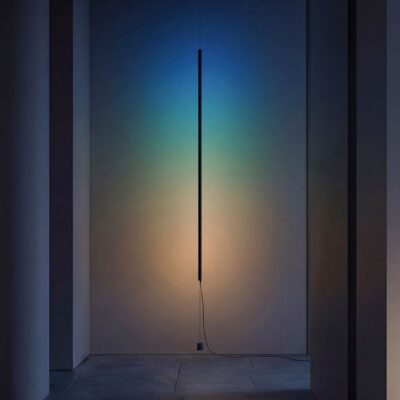
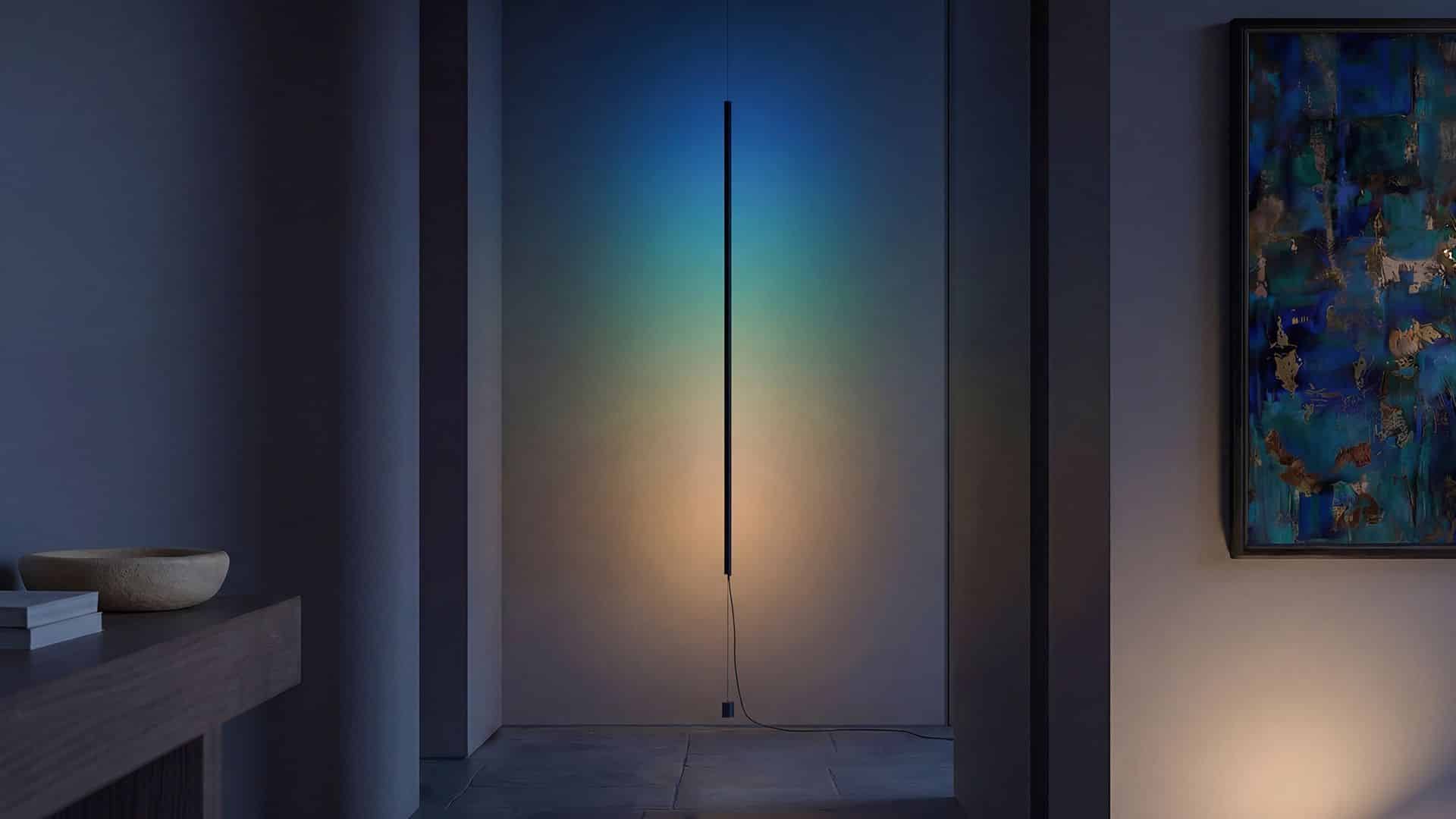
Following the launch of the more affordable table and floor lamps from the Play series, Philips Hue introduced three new additions to the Signe family in early September. The table and floor lamps in this series have been with us for several years now. Joining the lineup are a light pole that leans against the wall, a ceiling light, and a hanging light. Philips Hue calls this the Hue Gradient Signe Pendulum. I’ve already had the chance to try out this new design piece.
Let me get this out of the way right away: it’s going to be expensive. While the Hue Play floor lamp was priced starting at 149.99 euros this summer, the Hue Gradient Signe Pendulum costs a hefty 349.99 euros. That’s 10 euros more than the regular Hue Play Gradient Signe floor lamp.
Technical Specifications of the Hue Gradient Signe Pendulum
When it comes to lighting, the new pendant lamp offers exactly what we’ve already come to expect from the floor lamp. The “light tube” itself is 129.7 centimeters long and delivers a maximum brightness of 2,550 lumens at 6,500 Kelvin. That’s significantly more than is possible with the Play series, for example.
What’s particularly exciting is that Philips Hue specifies a Color Rendering Index (CRI) of 90 for this fixture, which features an aluminum housing. The color temperature ranges from 1,000 to 20,000 Kelvin. Both of these specifications are better than those of the classic Hue Gradient Signe.
Here’s how to mount the pendulum light on the ceiling
Now, of course, you need to find a suitable spot for installation. From a technical standpoint, there are really only two restrictions: The room must have a ceiling height between 180 and 330 centimeters. Additionally, the nearest outlet must be no more than 250 centimeters away.
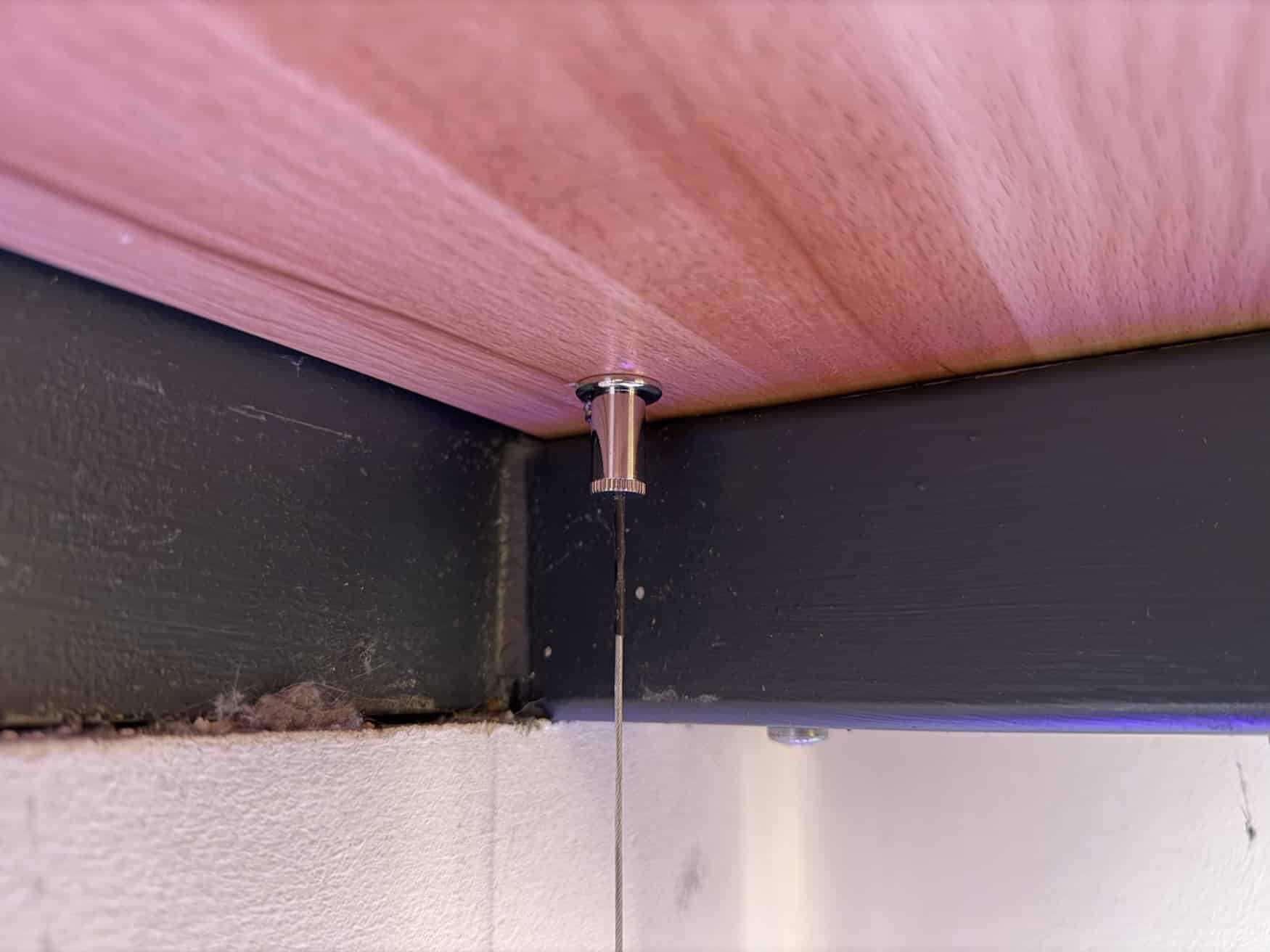
Actually installing the Hue Gradient Signe Pendulum isn’t a big challenge at all. Unscrew the ceiling mount from the pendant light and secure it to the ceiling with a screw. In my case, I attached the mount to the underside of a wooden step. Then simply screw the pendant light back onto the ceiling mount.
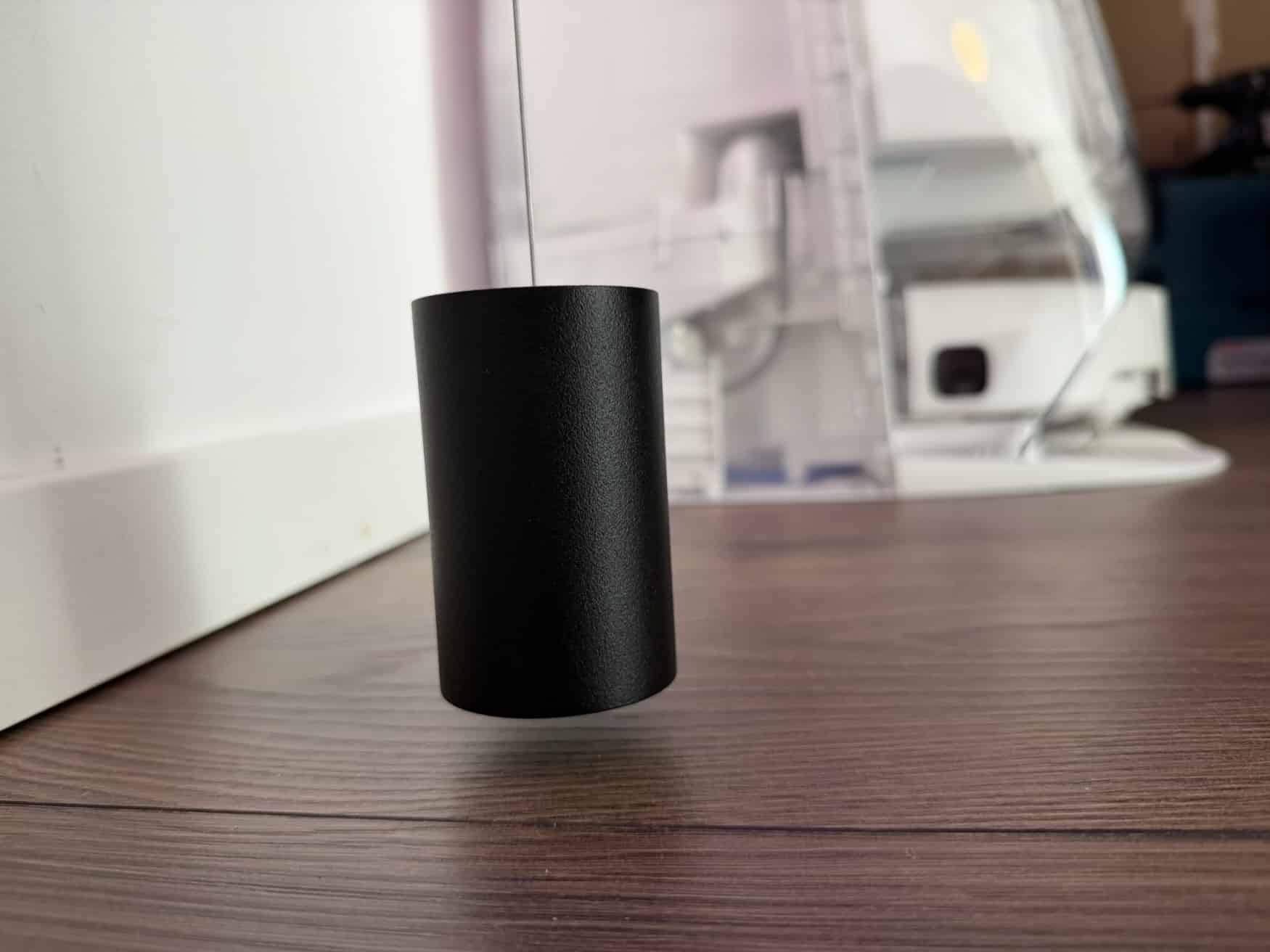
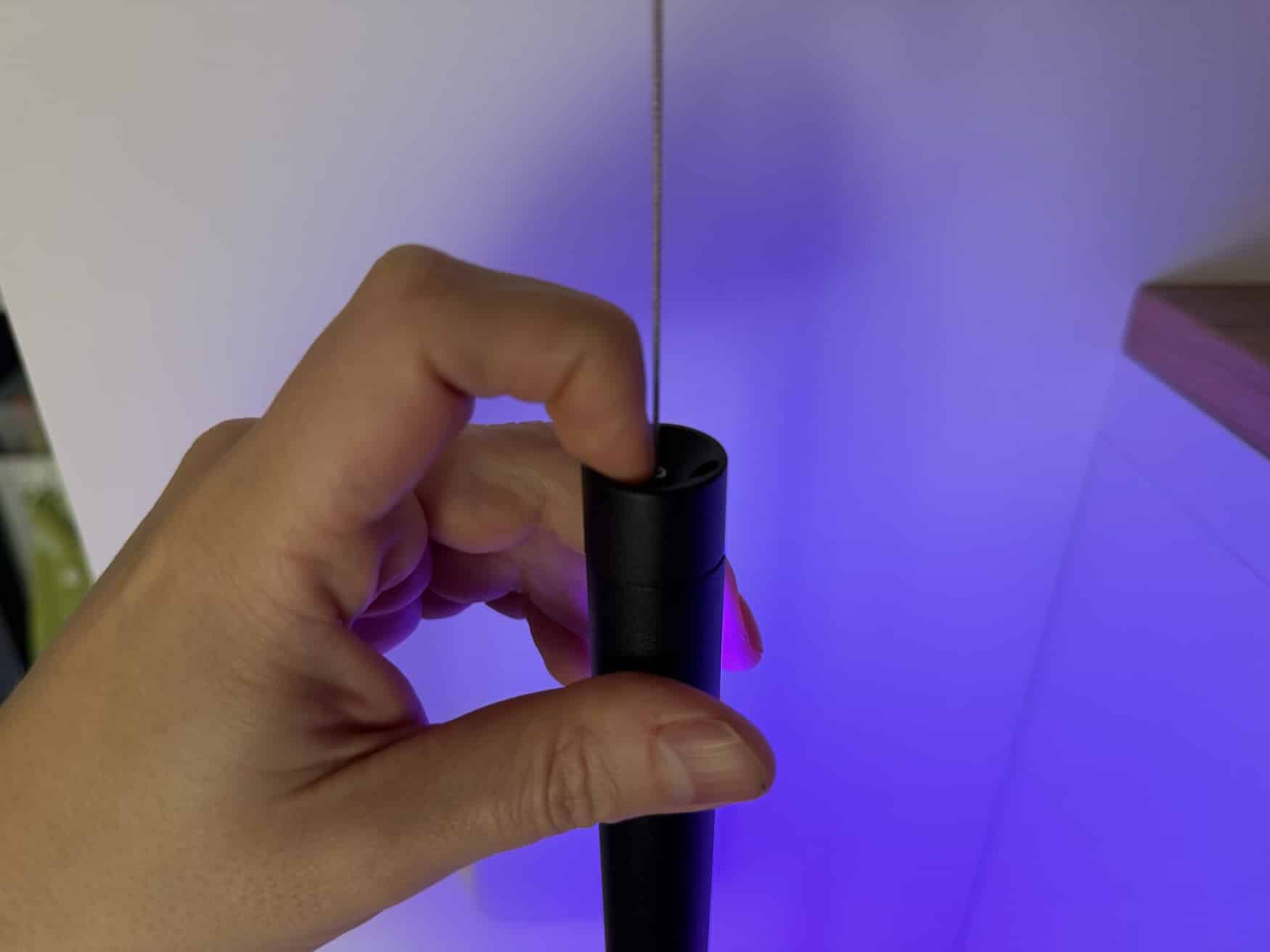
The next step is to adjust the length of the wire rope. To do this, simply pull out the required length from the weight, which hangs like a pendulum at the end of the wire rope. Philips Hue specifies that the distance to the floor should be between 1 and 10 millimeters. However, there’s probably no reason why the weight can’t hang 10 or 20 centimeters above the floor if you prefer that look.
Positioning the Hue Gradient Signe Pendulum
The light tube can be easily slid upward along this wire. To move it downward, you need to press a small “button” on the top. This works really easily and well.
Philips Hue states that the Hue Gradient Signe Pendulum can also be rotated 360 degrees this way. That didn’t really work for me, though, mainly because the power cord provided significant resistance. It actually took me a few minutes to properly align the Hue Gradient Signe Pendulum with the wall. Quickly turning it around is definitely not as easy.
Familiar Control via the Hue App
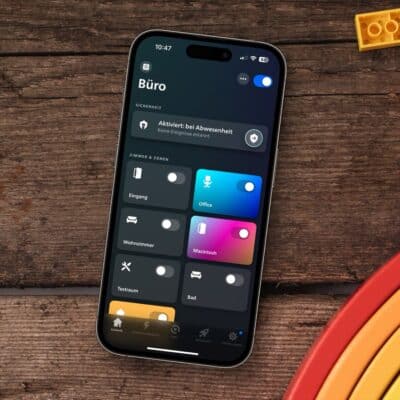
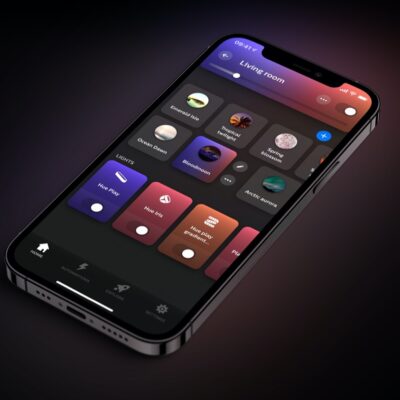
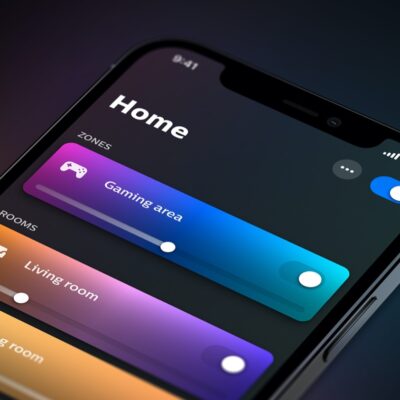
There are basically no surprises in the Philips Hue app. The Hue Gradient Signe Pendulum behaves just like any other familiar Philips Hue gradient product. You can activate scenes, place your own colors on the color wheel, and use various modes or effects.
The connection to the Hue app is made either directly via Bluetooth to your iPhone or iPad. The most likely option is certainly the Zigbee connection to the Hue Bridge. In principle, a direct connection to a compatible smart home system of your choice via Matter over Thread is also possible, but in this case, only a single continuous color is supported.
The Hue Gradient Signe Pendulum needs the perfect spot
Personally, I really like the look of the Hue Gradient Signe Pendulum. It’s simply a design concept that hasn’t been seen before in the smart home world. However, the price of 349.99 euros is also quite a statement.
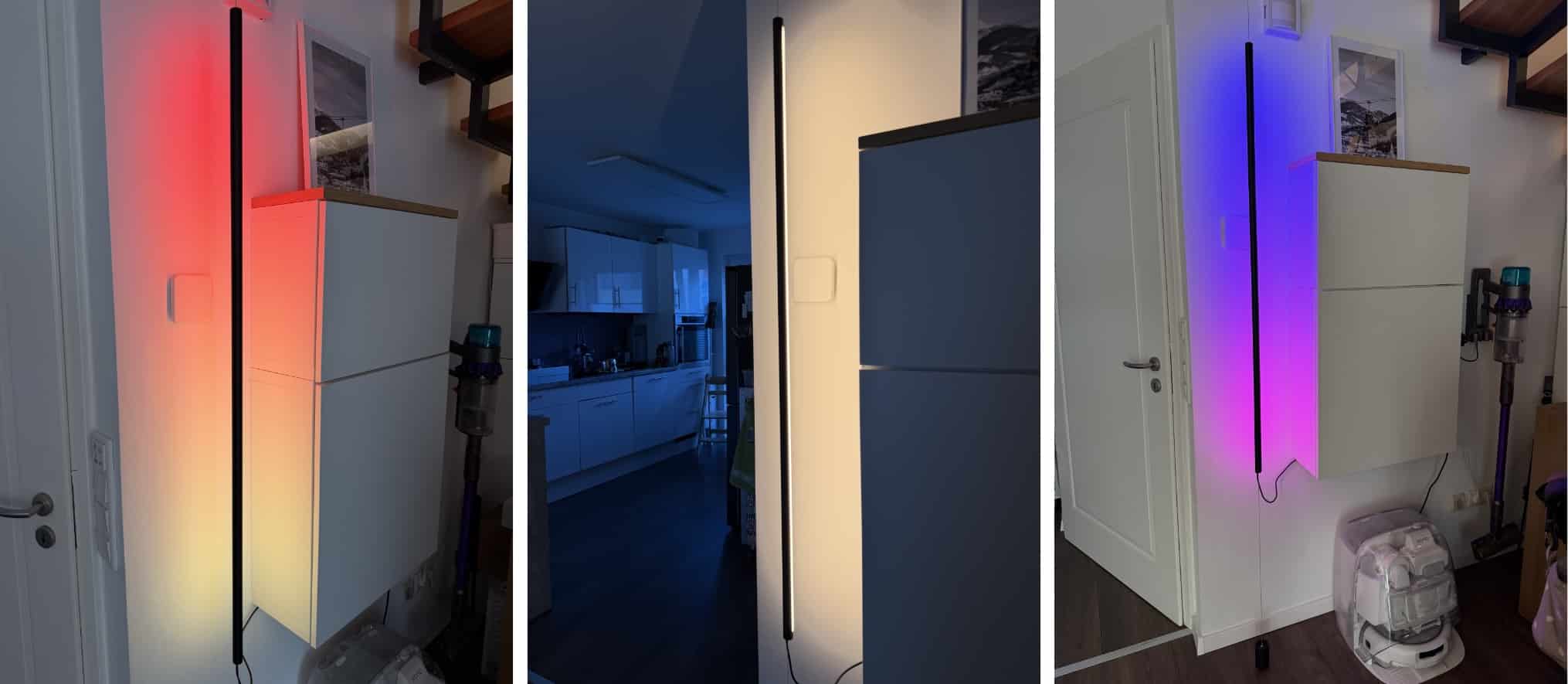
I don’t think the power supply is handled in the best way. Philips Hue once again relies on a bulky AC adapter, and the controller isn’t built into the lamp either. This is especially annoying if you have a free wall outlet right nearby, because then you have to figure out how to hide the entire cable. You should definitely think about how you’ll handle this in your own home beforehand.
Unlike the Philips Hue Gradient Signe floor lamp, the new Hue Gradient Signe Pendulum is only available with a black housing. Philips Hue hasn’t yet introduced a white version.
The Bottom Line on the New Philips Hue Hanging Light
With the new Hue Gradient Signe Pendulum, the Hue family has definitely gained a visually striking addition. In terms of lighting technology, there’s nothing to complain about; however, the rotation mechanism and power supply aren’t quite optimized. I would have liked to see more flexible options, especially regarding the cable.
If you like the look of this new release and have a suitable spot for it in your home, this pendant light is certainly a very interesting addition—especially, of course, when combined with other products from the Signe family in the same room.

Hue Gradient Signe Pendulum
€349.99


This is a failure of both design and engineering.